The best small boarding schools in the UK offer something the famous large ones cannot replicate: the experience of being genuinely known, by your houseparent, your teachers, your community. If you are looking for a school that uses its smallness well, this guide will help you find it.
There is a particular kind of parent who visits one of the great English boarding schools, the long drive, the impressive gatehouse, the year group of 300 and walks away knowing, quietly and with certainty, that it is not right.
Not wrong, exactly. Impressive, even. But not right.
If that is you, this guide is for you. Because the question 'what are the best boarding schools in the UK?' nearly always produces a list of the largest and most famous. What it rarely produces is an answer to the more useful question: what are the best boarding schools for a child who would be lost, or flattened, or simply less themselves in a big institution?
This is a guide to that second question.
Why 'Best' Is Not the Same as 'Biggest'
The league tables measure academic results. They do not measure whether your child eats their meals alongside the same group of people every day, whether their houseparent knows what mood they woke up in, or whether they have genuine friends across different year groups rather than just their own set.
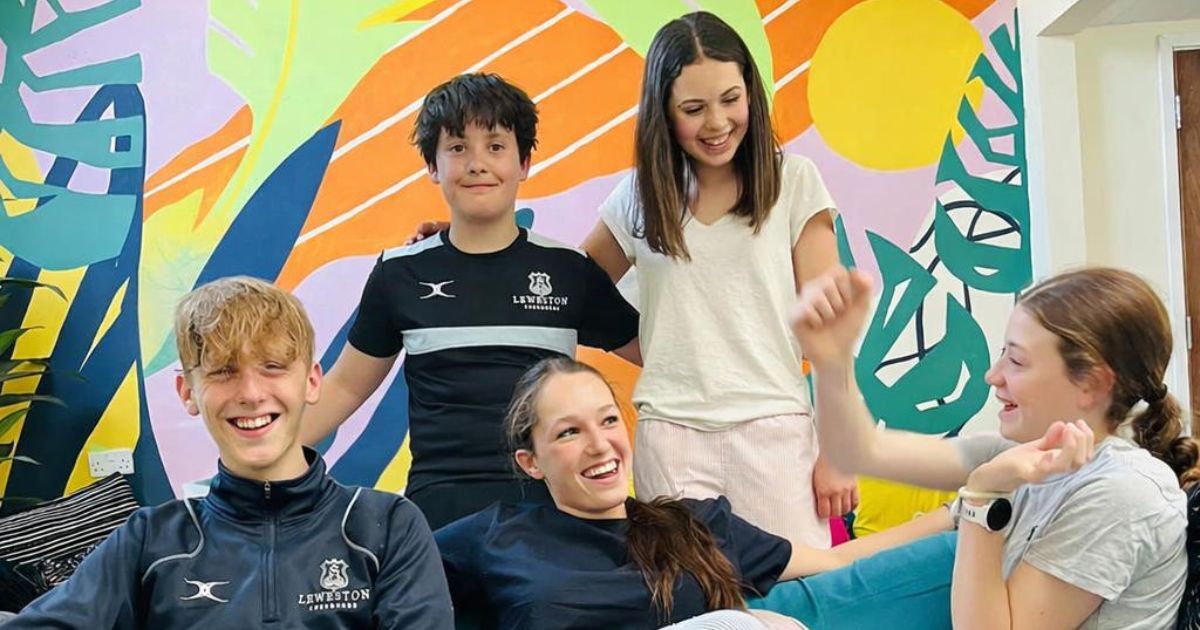
Small boarding schools offer something that cannot be ranked: the experience of being known. When a school has 350 pupils rather than 1,000, the Head knows most of them by name. When a boarding house has 30 pupils rather than 80, the houseparent notices when one of them is quieter than usual. This is not pastoral care as a policy document, it is pastoral care as a daily reality.
Research into adolescent development consistently finds that sense of belonging is one of the strongest predictors of both wellbeing and academic progress. A child who feels seen, known and valued within their school community is more likely to take creative risks, ask for help when they need it, and develop the kind of confidence that lasts beyond school. Large institutions can offer this too but they have to work harder to engineer it. Small schools tend to have it built in.
What to Look for in a Small Boarding School
Here is the framework for evaluation because 'small' on its own is not a virtue. What you are looking for is a school that is small and has used that smallness well.
Houseparent continuity. Continuity of relationship is what transforms a house from a dormitory into a home. Ask how long the current houseparents have been in post and who is involved and who else is involved in the boarders' care.
Cross-year mixing. In a well-run small boarding school, older and younger students mix naturally, at meals, in activities, in the house. This is a powerful social environment that large schools rarely replicate. Ask how the school structures this.
Timetable flexibility. One advantage of a smaller operation is that it can adapt. Does the school offer flexible boarding alongside full boarding? Can it accommodate a child who plays Saturday sport for a local club, or whose parents want them home some weekends? Flexibility signals a school that puts families first.
Academic breadth, not just results. Small schools sometimes have a narrower subject offer. Check that the curriculum meets your child's interests at GCSE and Sixth Form, particularly if they have unusual combinations in mind.
What happens when things go wrong. Ask directly: what is the process when a boarder is struggling emotionally? Who do they go to first? How quickly does that information reach parents? The answer tells you more than any marketing copy.
What a Small Boarding School Actually Looks Like in Practice
The six criteria above are the framework. Here is what they look like when they come together in a school that has used its smallness well.
At Leweston, around 150 Prep and 350 Senior pupils share a 50-acre campus in the Dorset countryside. Boarding is genuinely central, not an add-on for a handful of international students, but the heartbeat of the school community. Full, weekly and flexi boarding are all available, and there are no lessons on Saturday mornings, which means the weekend has room to breathe.
Classes at GCSE and A Level typically run to eight to twelve pupils. That number sounds small until you sit in a room with twelve engaged students and one teacher who can follow every thread of thinking and address every moment of confusion in real time. It is a materially different experience from a class of 25.
The houseparents have, in many cases, been in post for years, and in one case was at the school themselves. They know which children are morning people and which need twenty minutes before they're ready to talk. They know who had a difficult phone call home last week and who has been quietly worried about a friendship. This continuity of relationship, the same adults, in the same house, across the years, is not a luxury. It is the architecture of belonging.
The Problem with Overlooking Smaller Schools
Families who begin their search for a boarding school online tend to encounter the same names repeatedly: the large, famous schools with substantial marketing budgets and centuries of name recognition. These schools are genuinely excellent, but the dominance of their visibility creates a distorted picture of what the sector contains.
There are schools of 300 to 400 pupils, warm, academically strong, with better staff-to-pupil ratios than schools twice their size and pastoral cultures that no large institution can fully engineer, that simply do not appear in most conversations, because they do not spend money on being talked about.
The antidote is to visit. The difference between a school that uses its smallness well and one that is simply small becomes obvious the moment you walk through the door. Pay attention to how pupils greet visitors, how staff talk about their colleagues, and, most telling of all, whether the pupils look like they want to be there.
When Small Is the Answer
If your child is the kind of person who shrinks in a crowd but expands in a small group, who is easier to know than to notice, who does their best work in a room where they feel safe, who needs one good teacher who really understands them rather than a department of ten who collectively manage them, then small is not a compromise.
It is the answer.
Leweston is one of Dorset's best-kept boarding secrets. A school of 500 pupils, 50 acres of countryside, full and flexi boarding, no Saturday school, and a community where everyone, genuinely, knows your child's name.
Ready to find out more?
Call 01963 211015 or visit leweston.co.uk to book a visit or speak to the team.

Leweston School is a co-educational independent day and boarding school in Sherborne, Dorset, for pupils aged 3 months to 18, offering Nursery, Pre-Prep, Prep, Senior and Sixth Form on a single campus.