
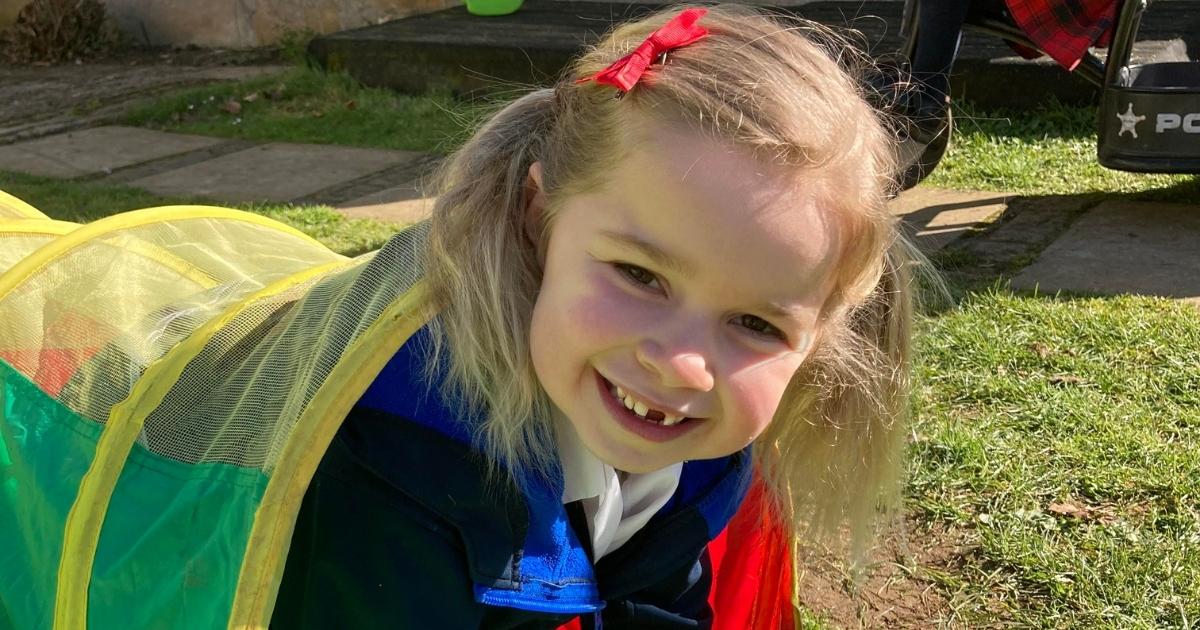
When parents visit a Pre-Prep for the first time, they often arrive with a fairly long list of questions. They want to know about class sizes, phonics schemes, specialist teaching, clubs and facilities, all of which are perfectly reasonable things to ask, yet they are not always the things that young children notice first.
Children experience a school rather differently. They notice whether they feel comfortable there, whether adults know their names, whether there are interesting things to discover, whether learning feels enjoyable and whether school is somewhere they are happy to return to the following morning. The quality of those everyday experiences often shapes childhood far more powerfully than any curriculum document ever could.
A great Pre-Prep is therefore not defined by a single programme, building or initiative, but by the atmosphere it creates and the opportunities it offers every day, combining the security young children need with the stimulation that keeps them curious about the world around them.
A Small World That Gradually Gets Bigger
One of the great advantages of a Pre-Prep within a larger school is that children can enjoy the security of a small and nurturing environment while still benefiting from being part of something bigger.
At Leweston, Reception to Year 2 pupils learn within their own dedicated setting, complete with age-appropriate classrooms, outdoor areas and spaces designed specifically for young children, yet all of this sits within a much wider school community spread across fifty acres of Dorset countryside. As a result, children grow up surrounded by opportunities they can gradually access as they become ready, discovering swimming pools, sports facilities, music rooms, woodland areas, art studios and specialist teaching long before they formally move into later stages of school.
This creates a particularly natural sense of progression because the wider campus never feels unfamiliar. Instead, it becomes part of children's everyday experience from the beginning, allowing confidence and independence to develop gradually rather than through a series of dramatic transitions.
Learning Does Not Stay Inside the Classroom
Adults sometimes divide school life into neat categories, imagining lessons happening in classrooms while everything else is treated as an additional extra. Young children rarely see the world in such tidy compartments, for them, learning happens everywhere.
It happens while building dens, listening to stories, planting seeds, swimming lengths, exploring woodland paths, creating artwork, learning songs and asking questions that take an entire morning to answer. The most successful Pre-Prep environments embrace this reality by recognising that curiosity often thrives when children encounter ideas through experience as well as instruction.
At Leweston, children benefit from specialist teaching in areas including music, art, drama, sport and languages, while also enjoying regular access to facilities often associated with much older pupils. Weekly swimming lessons, opportunities to perform, create and explore, and encounters with specialist teachers all help broaden children's horizons from an early age, exposing them to experiences that may eventually develop into lifelong interests.
The value of these opportunities lies not simply in the activities themselves but in the possibilities they create, because a child cannot discover what fascinates them until they have first been given the chance to encounter it.
The Outdoors Is Not an Extra
Some of the most powerful memories of childhood are rooted in outdoor experiences, partly because children are naturally drawn towards exploration and partly because the natural world provides almost endless opportunities for discovery.
A woodland never looks exactly the same twice. Seasons change. Habitats evolve. Weather transforms familiar places into entirely new landscapes and every fallen log, patch of mud or unexplored corner seems to contain something worth investigating. For this reason, outdoor education works particularly well in the early years, allowing children to learn through observation, movement and direct experience rather than solely through description.
At Leweston, outdoor learning forms part of everyday life rather than appearing as an occasional enrichment activity. Forest School sessions take place regularly in the school's Enchanted Wood, while wider outdoor spaces provide opportunities for exploration throughout the year, helping children become comfortable, confident and curious in natural environments from the very beginning of their education.
The result is not merely a deeper connection with nature, but a style of learning that feels instinctively suited to the way young children engage with the world.
Being Known Really Matters
One of the words parents hear frequently when visiting schools is "pastoral". In the early years, pastoral care is often much simpler than people imagine. It is about being known. It is about teachers recognising when a child is excited, worried, tired, proud, nervous or bursting to share a story that simply cannot wait until later. It is about children feeling seen as individuals rather than managed as part of a group and about parents knowing that the adults caring for their children understand them properly.
This is one reason smaller Pre-Prep environments can be so powerful. Relationships develop quickly, conversations happen naturally and children gain confidence because they know the people around them well. At Leweston, daily interaction between parents and teachers remains an important part of school life, while platforms such as Tapestry allow families to share in their children's experiences as they happen, creating a partnership between home and school that helps children feel secure in both.
Growing Up in a Community
One of the distinctive features of a through-school is the opportunity for younger and older pupils to know one another. In many schools, children spend their early years almost entirely surrounded by others of a similar age. At Leweston, younger pupils become part of a much broader community from the outset, regularly seeing older children and gradually developing a sense of belonging that extends beyond their own classroom.
Year 6 buddies provide a particularly good example of this, creating relationships that benefit both age groups. Younger children gain role models and familiar faces, while older pupils develop responsibility, empathy and leadership through supporting those at the start of their educational journey. The result is a school community that feels connected across age groups rather than divided between them.
What Parents Usually Notice First
When families visit a Pre-Prep, they often expect to spend most of their time looking at facilities, displays and classrooms. What tends to leave the strongest impression is usually something less tangible, it is the atmosphere. It is the child proudly explaining what they are doing, the teacher kneeling down to continue a conversation, the sense of calm activity in a classroom full of busy children and the feeling that learning is something enjoyable rather than something imposed. Those things are difficult to capture in a prospectus because they emerge from culture rather than infrastructure.
A great Pre-Prep ultimately provides much more than a beginning to formal education. It creates an environment in which children feel secure enough to explore, curious enough to question and confident enough to begin discovering the world for themselves, which may be one of the most valuable gifts any school can offer during those important early years.
Ready to find out more?
Call 01963 211015 or visit leweston.co.uk to book a visit or speak to the team.

Leweston School is a co-educational independent day and boarding school in Sherborne, Dorset, offering Prep, Senior and Sixth Form on a single campus.